



Pau D'Arco Bark 4 oz Cut and Sifted (Lapacho) for Pau D'Arco Tea
Pau D'Arco Bark 4 oz Cut and Sifted (Lapacho) for Pau D'Arco Tea

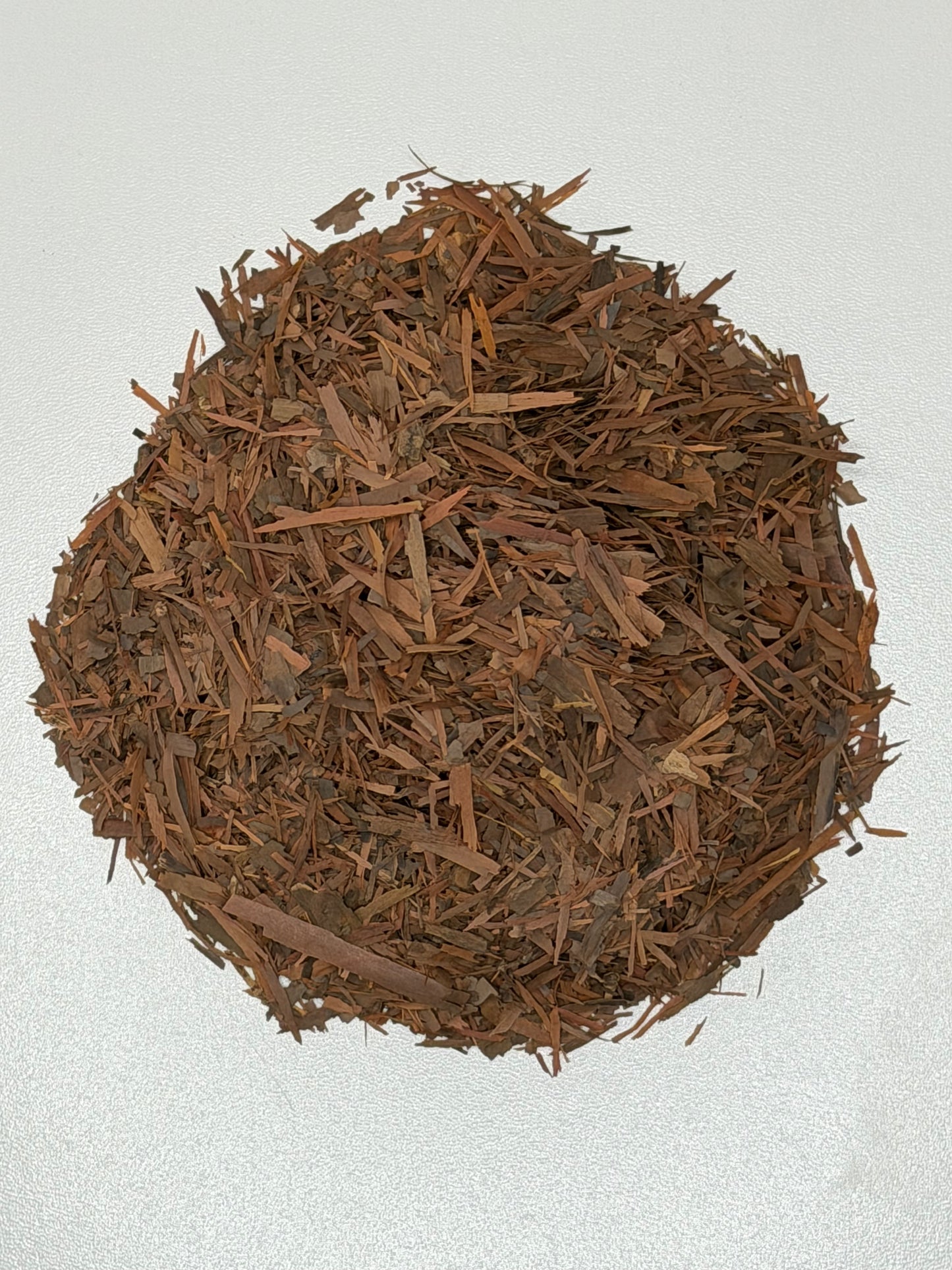
Organic or wildcrafted pau d'arco bark, cut and sifted (Tabebuia impetiginosa), 4 oz
One ingredient, no fillers and nothing added
Grown and harvested in Honduras
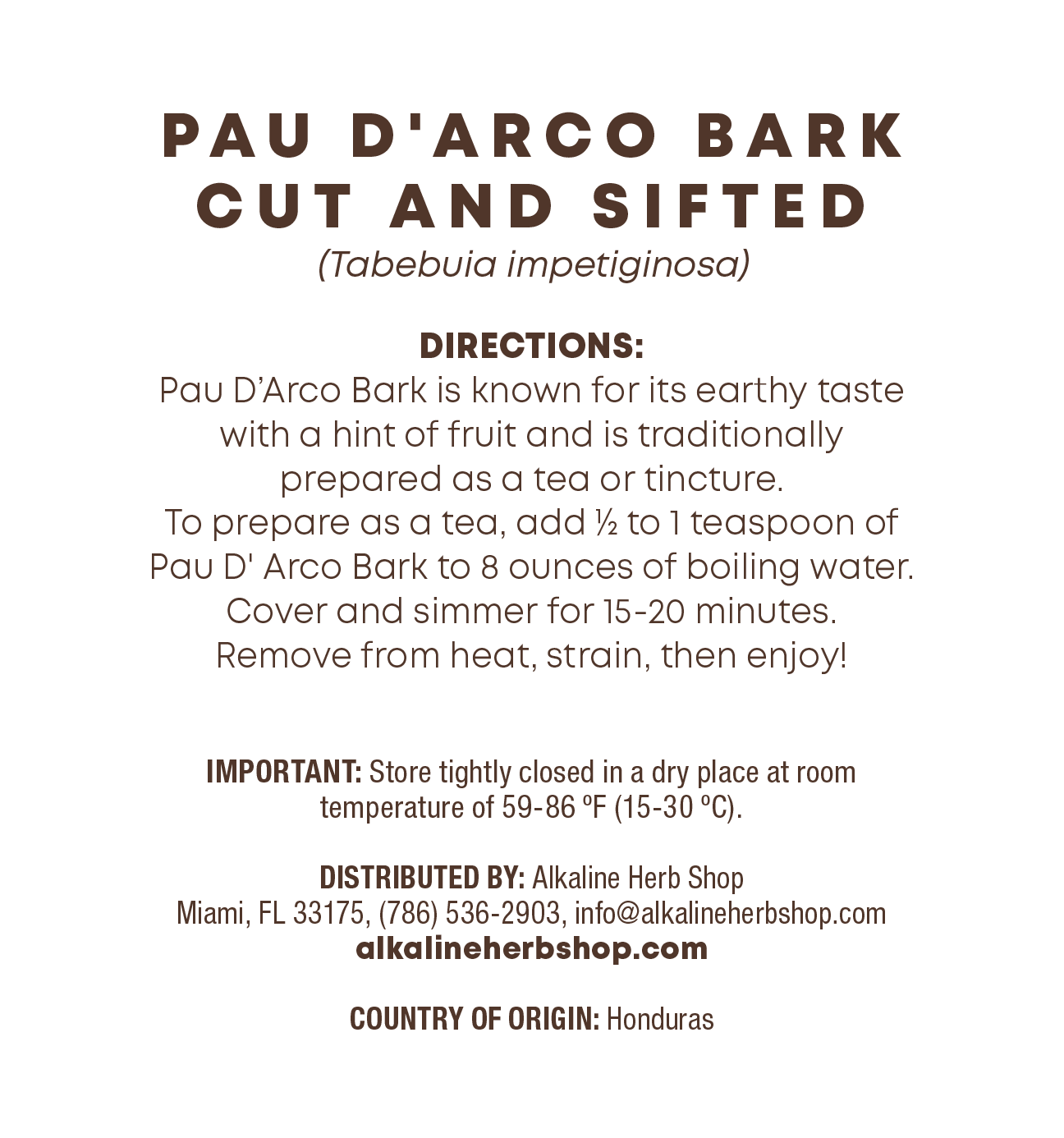
Simmer half to 1 tsp in 8 oz of water for 15 to 20 minutes, then strain
Earthy with a hint of fruit. Also called lapacho and pau de arco
Couldn't load pickup availability
Pau d'arco bark, cut and sifted, 4 oz. Tabebuia impetiginosa, the inner bark of a South American tree, grown and harvested in Honduras. Known as lapacho in Spanish and pau de arco in Portuguese. One ingredient, nothing added.
How to make pau d'arco tea, and why the method matters
This one is simmered, not steeped. Add half to 1 teaspoon to 8 fl oz of water, bring it to the boil, then cover and simmer for 15 to 20 minutes. Remove from the heat, strain, and drink. A bark is hard and dense, and a few minutes in a mug will not open it up. If pau d'arco has ever tasted of nothing to you, this is why. Some people simmer a larger pot for 20 minutes and keep it in the fridge for the next few days.
What it tastes like
Earthy and woody with a distinct hint of fruit behind it, a little like the smell of a wet forest floor with something sweeter underneath. It is not bitter in the way yellow dock or wormwood are. Most people drink it plain.
What is in the bag
Cut and sifted pau d'arco bark and nothing else. One ingredient, no fillers, no flavouring, nothing added.
What pau d'arco is, and all its names
A tall flowering tree of Central and South America, covered in bright pink trumpet flowers before the leaves come. Pau d'arco is the Brazilian Portuguese name, more correctly pau de arco, meaning bow stick, because the wood was used for hunting bows. In Spanish it is lapacho, and in Argentina, where it is the national tree, lapacho tea is an everyday drink. You will also see it sold as taheebo. The part used is the inner bark, which is what is in this bag.
How to store it
Tightly closed in a dry place at room temperature, 59 to 86°F (15 to 30°C), as printed on the bag.
Frequently asked questions
How do you make pau d'arco tea?
Simmer it, do not steep it. Half to 1 teaspoon in 8 fl oz of water, brought to the boil then covered and simmered 15 to 20 minutes, then strained. A short steep in a mug will not get much out of a hard bark. A fine mesh strainer catches the pieces on the way into the cup.
What does pau d'arco tea taste like?
Earthy and woody with a hint of fruit underneath. It is not sharply bitter, and most people drink it without anything added.
Is lapacho the same as pau d'arco?
Yes. Same tree, different languages. Lapacho is the Spanish name, pau d'arco or pau de arco is the Brazilian Portuguese one, and taheebo is another name you will see on labels. The botanical name is Tabebuia impetiginosa, which is printed on our bag.
Is this the bark or the wood?
The bark, cut and sifted. Pau d'arco is sold as the inner bark of the tree, which is the part traditionally simmered.
Is it organic, and where does it come from?
It is organic or wildcrafted pau d'arco bark from Honduras, and the country of origin is printed on the bag.
Where can I buy pau d'arco bark?
Here. Orders leave in 1 to 2 business days, and we ship worldwide with duty pre paid for most countries. The rest of the range is in loose leaf herbs and teas, and the other simmered bark we sell is cuachalalate bark, loose.
¿Qué es el lapacho?
El lapacho (Tabebuia impetiginosa) es la corteza interna de un árbol sudamericano de flores rosadas, árbol nacional de Argentina. En portugués se llama pau d'arco o pau de arco. Nuestra bolsa trae 4 oz de corteza de lapacho orgánica o silvestre de Honduras, cortada y tamizada, un solo ingrediente. Se hierve, no se deja reposar: agregue de media a 1 cucharadita a 8 fl oz de agua, hierva, tape y cocine a fuego lento de 15 a 20 minutos, luego cuele.
PRECAUTIONS
- Pau d'arco contains lapachol and related naphthoquinones, which can act against vitamin K. If you take a blood thinner or an antiplatelet medicine, speak to your physician before use.
- Do not use during pregnancy or while nursing. This is specific to this bark, not the general line.
- Use it short term rather than continuously. Large amounts can cause nausea.
- Not recommended for anyone under 18.
- Individuals with known medical conditions should consult a physician before use.
- Keep out of reach of children.
DIRECTIONS:
Pau d'arco bark has an earthy taste with a hint of fruit and is traditionally prepared as a tea or a tincture. To prepare as a tea, add half to 1 teaspoon to 8 fl oz of water. Bring to the boil, then cover and simmer for 15 to 20 minutes. Remove from heat, strain, then enjoy.
It is simmered rather than steeped because it is a hard bark. A short steep in a mug will not get much out of it.
Store tightly closed in a dry place at room temperature, 59 to 86°F (15 to 30°C).
- Processing Time: Orders ship within 1 to 2 business days.
- Refunds: 100% satisfaction guarantee. Contact within 30 days of receipt, return unused portions at your expense, and receive a full refund upon receipt.
- Customs Duty Tax: Pre-paid and covered for most countries.